 Teorio
Environmental classification of vehicles
Environmental classification of vehicles is about categorizing how much locally harmful emissions (e.g., particulates and nitrogen oxides) a vehicle produces. For drivers in Sweden this is important because the environmental class can determine whether you are allowed to drive in certain urban areas or environmental zones and affects local air quality regulations.
Rules & Regulations
- The environmental class indicates the vehicle's emission characteristics and is usually based on the vehicle's type approval or emission standards.
- Information about a vehicle's environmental class can be checked via vehicle details at the responsible registration authority (for example, the Swedish Transport Agency) or in the registration certificate.
- Municipalities can introduce environmental zones that prohibit or restrict vehicles below certain environmental classes to improve local air quality.
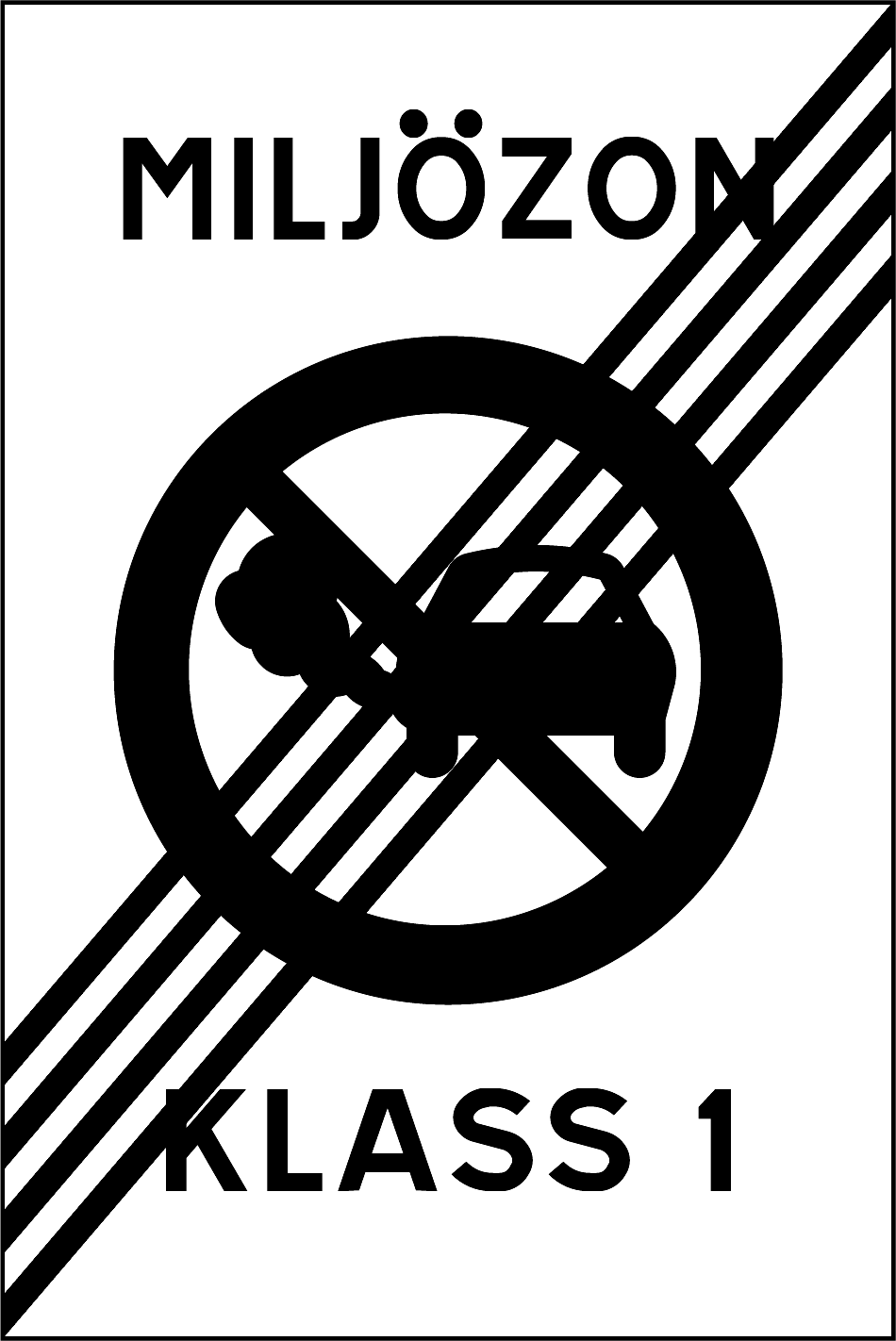
- Signage or local regulations in an urban area indicate which vehicles are affected — the interpretation is based on the vehicle's registered environmental class, not only the fuel type.
- It is the vehicle owner's/driver's responsibility to know their car's environmental class and to comply with any local environmental zone rules.
- Sweden has three environmental zone classes: class 1 (heavy vehicles, requires e.g. Euro VI for the longest validity), class 2 (passenger cars/light vehicles, requires at least Euro 5/6 for petrol and diesel engines) and class 3 (only electric, fuel cell, and gas vehicles, and some plug-in hybrids for heavy vehicles).
- The Swedish Transport Agency establishes and records a car model's environmental class, based on the manufacturer's notification and the vehicle's exhaust approval at first registration.
Tips for Drivers
- Check your car's environmental class before driving into city centres: use the Swedish Transport Agency's vehicle information service or the registration certificate to be sure.
- Watch for signs and local instructions for environmental zones — some zones may have electronic monitoring or control stations.
- If you are considering retrofitting (e.g., a particulate filter), first check with the responsible authority whether the modification can be registered and change the environmental class.
- Plan alternative routes or park outside the zone and use public transport if your car does not meet the zone's requirements.
Common Mistakes
- Believing that environmental class is only based on fuel type (e.g., diesel vs petrol) rather than the registered emission class.
- Confusing the Euro standard labels with national environmental classes without checking the vehicle's actual registered class.
- Assuming that environmental zone rules apply nationwide; they are introduced and designed by individual municipalities and can vary.
Exam Tip
On the theory test you may be asked where to find information about a vehicle's environmental class. Answer that you should check the vehicle details (for example via the Swedish Transport Agency's register) or the registration certificate — many questions require you to state where the information is found, not just what the classification means.
Did You Know?
Environmental zones are introduced by municipalities to reduce local health and environmental problems caused by air pollution, and which vehicles are affected can vary between different cities and zone types.
Frequently Asked Questions
How do I see which environmental class my car has?
You can check the vehicle's details in the registration certificate or via the Swedish Transport Agency's vehicle information online. There you will normally find which environmental class or emission category the car is registered under.
Am I allowed to drive in an environmental zone if my car has higher emissions than the zone allows?
If your car does not meet the zone's requirements you may be subject to checks and sanctions according to the municipality's regulations. The rule is that you must follow signage and local rules for the zone in question.
Can I change my car's environmental class by retrofitting, e.g., a particulate filter?
In some cases approved retrofitting and a subsequent registration change can affect the vehicle's registered emission class. Contact the responsible authority (for example, the Swedish Transport Agency) to get information about what applies to your car.
Do environmental zone rules apply equally to all vehicle types?
No, the rules can differ between vehicle types — some environmental zones target heavy vehicles, others also target passenger cars. Check the local regulations for the relevant zone.
How do I find out my car's Euro class?
You can check your car's Euro class and environmental zone eligibility via the Swedish Transport Agency's "My Vehicles" service.
Related Road Signs

Practice more in the app
Study Swedish road signs and driving theory in English. 314 signs with rules, tips and quizzes.